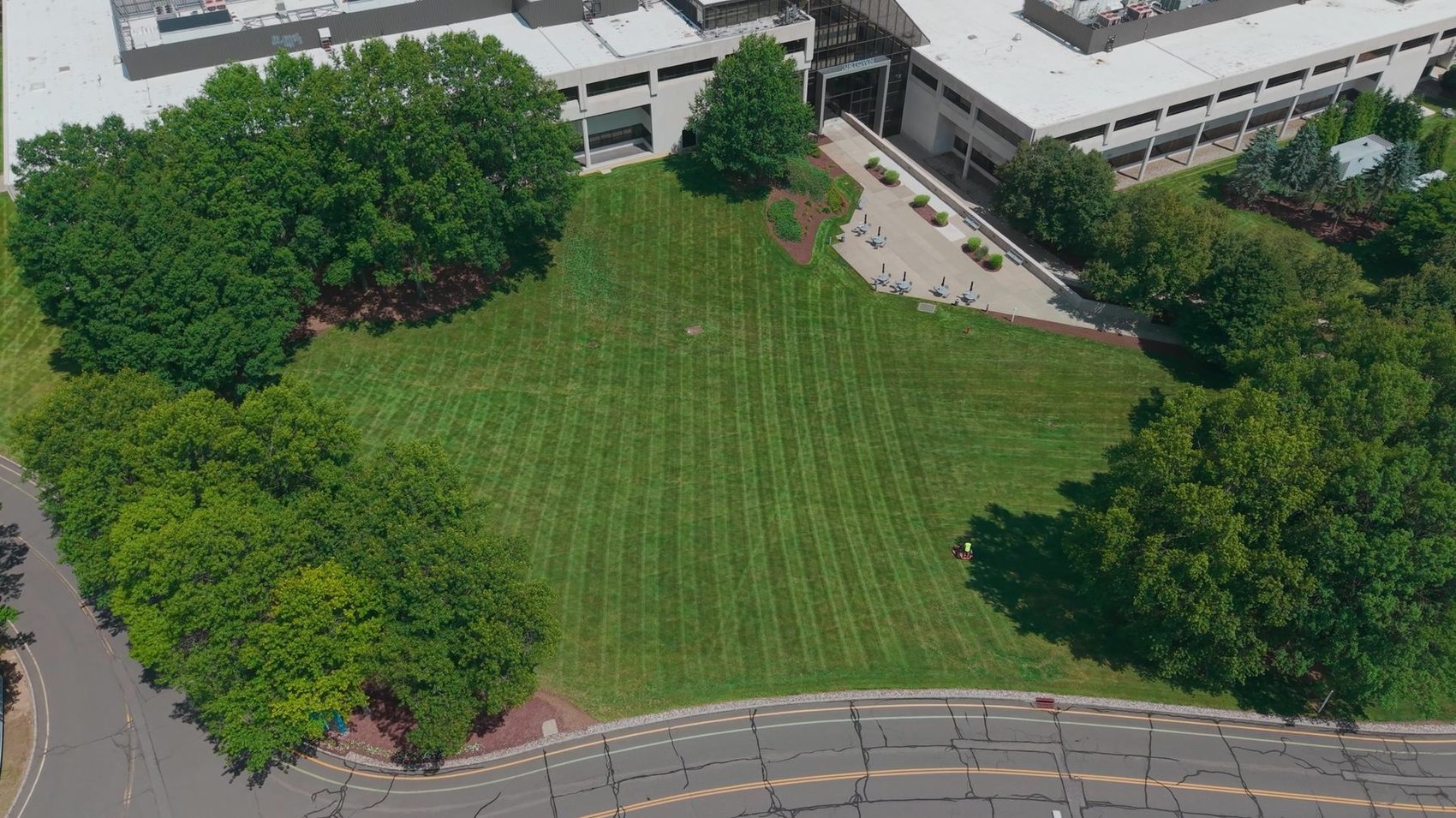
Commercial Lawn Care Company in Morris County, NJ
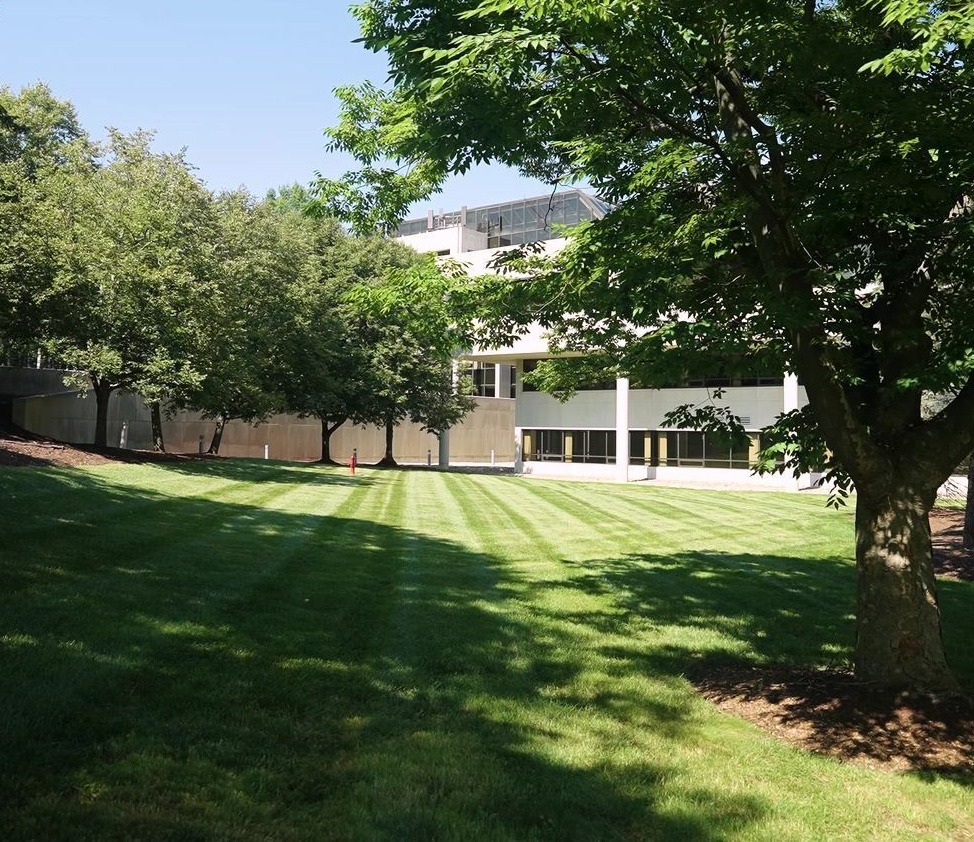
Green grass on a commercial site starts in the soil, not under the mower deck. Fullerton Grounds Maintenance builds fertilization, weed control, and turf renovation programs around what your soil and your sun exposure are doing.
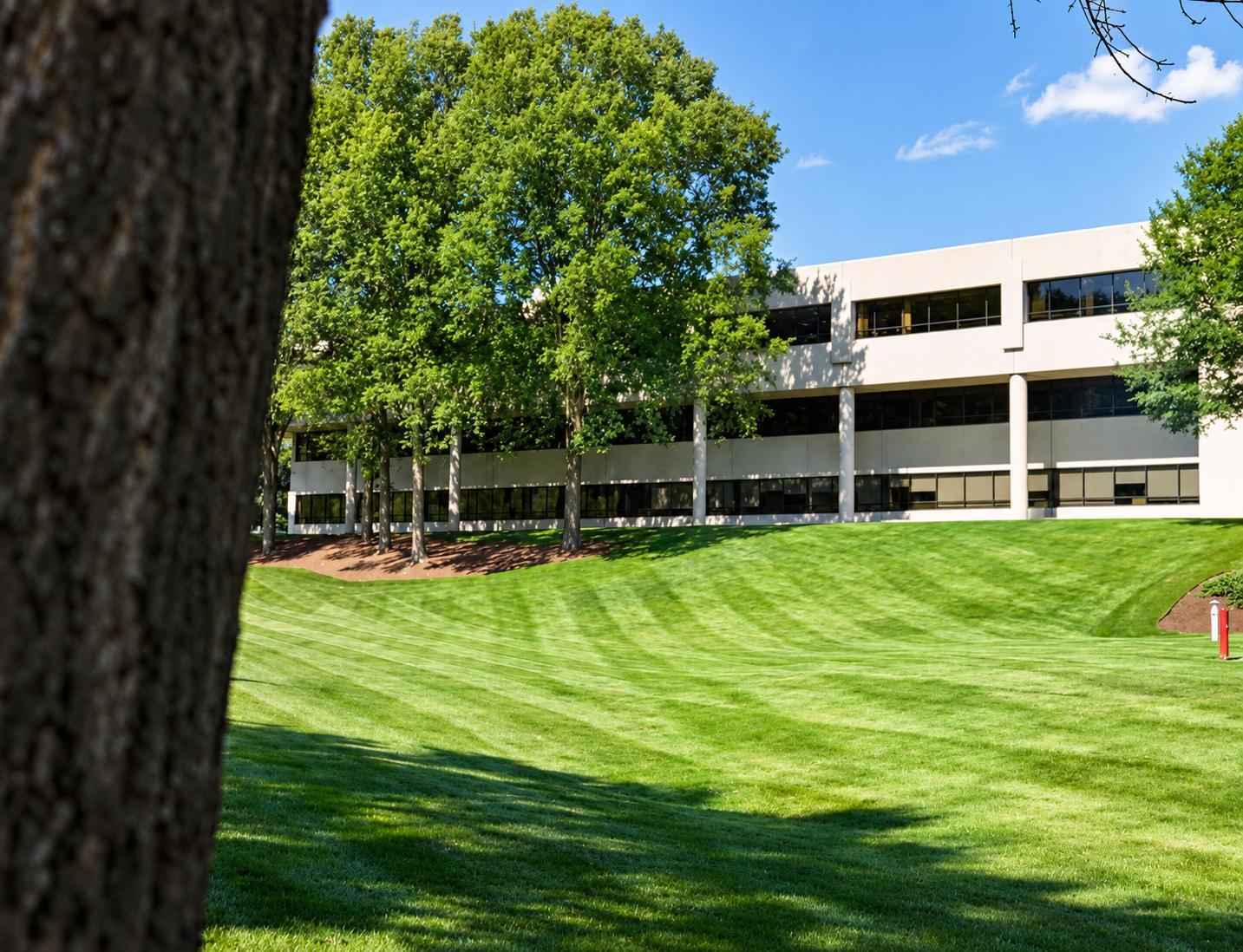
Fewer Bare and Weedy Areas
Licensed, In-House Application
Treatment Timed to the Season

Mowing Alone Will Not Fix a Failing Lawn
A property can be cut on a perfect schedule and still look thin, patchy, and yellow by mid-July. Weekly mowing maintains what is already there. It does not correct compacted soil, low pH, crabgrass pressure, or a grub population working under the surface.
Commercial lawn care treats those causes on a calendar built for New Jersey turf, so the cutting schedule has something worth cutting.
What a Commercial Lawn Care Program Includes
-
Multi-application feeding scheduled across the season, with rates set for cool-season turf and adjusted for shade, traffic, and irrigation coverage.
-
Pre-emergent applications ahead of crabgrass germination and targeted post-emergent treatment for broadleaf weeds through the growing season.
-
Turf monitoring for grubs, chinch bugs, and fungal issues, with treatment handled through the Integrated Pest Management division rather than applied on a blanket schedule.
-
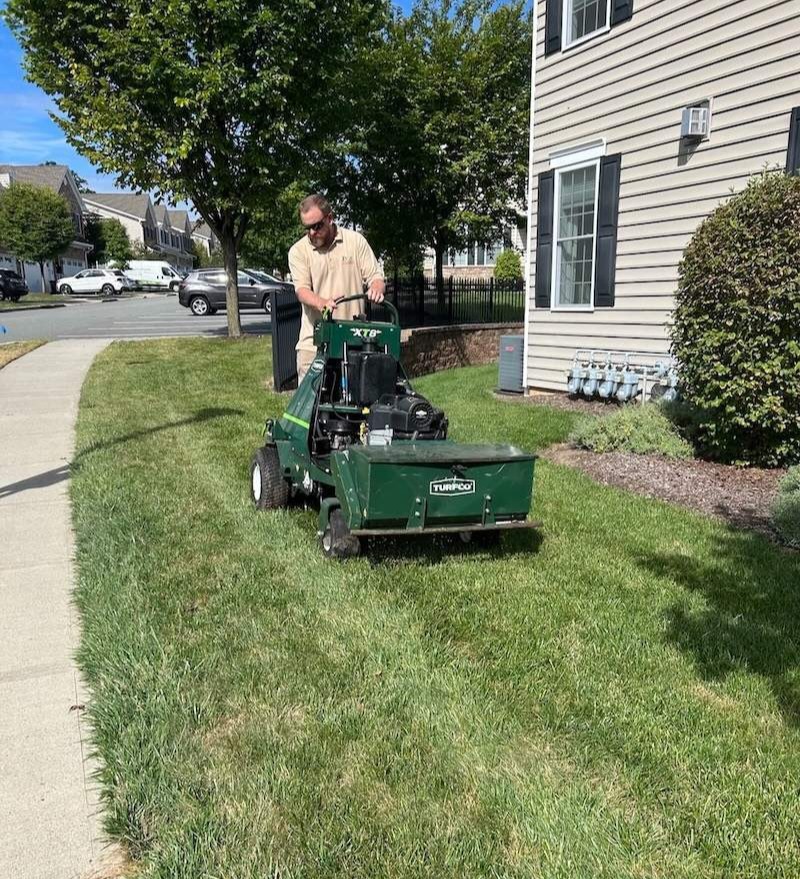
Core aeration to relieve compaction on high-traffic turf, paired with overseeding to thicken stands before they thin out further.
-
Renovation options for areas past the point of treatment, chosen against site access, slope, and how fast the area needs to be back in use.
-
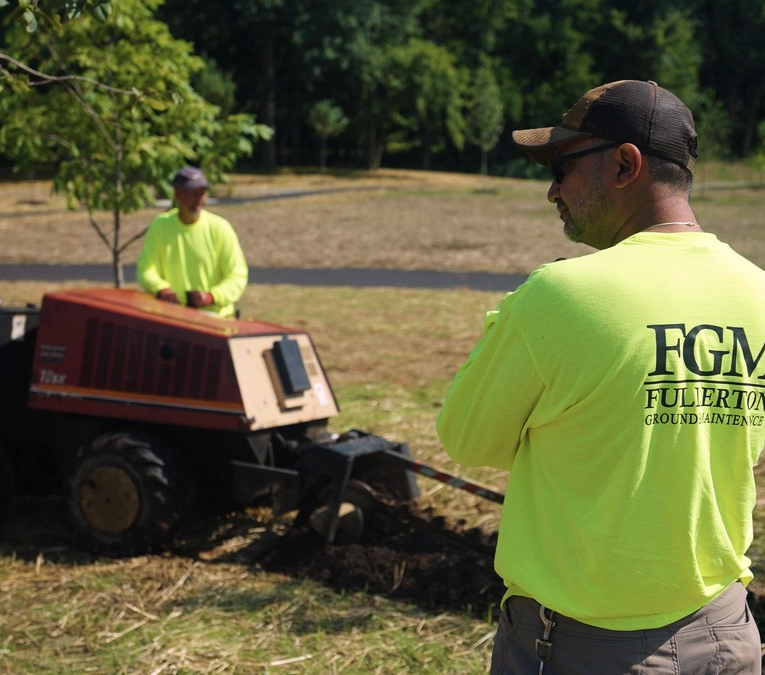
Topsoil, seed, and straw mulching for restoration work, plus supplemental watering on newly seeded areas where the irrigation system does not reach.

How a Turf Program Gets Built
01
Step 01
Assess the Turf
Fullerton Grounds Maintenance walks the property, notes problem areas, and identifies what is causing the decline rather than treating the symptom.
02
Step 02
Set the Application Calendar
You receive a season-long plan showing what gets applied, when, and what each round is meant to accomplish.
03
Step 03
Treat and Adjust
Applications run on schedule, results get checked on subsequent visits, and the plan shifts when the weather does.

Application Is Licensed and Supervised In House
Fullerton Grounds Maintenance runs a dedicated Integrated Pest Management division, and in-house NJ state-licensed experts supervise application whenever chemical treatment is required.
That matters on sites where residents, tenants, patients, or students are on the grounds during the workday. Posting, timing, and product selection are handled in-house by the team that knows the site.
When Turf Is Past Treating
Some areas cannot be fed back to health. Compacted entry strips, shaded courtyards where grass has never held, slopes that wash out every spring, and turf damaged by plow traffic all need a different answer.
In those cases you get a renovation recommendation with the tradeoffs spelled out: what it costs to restore turf, what it costs to convert the area to bed or hardscape instead, and which one stops the recurring expense. Planting and softscape work often ends up the cheaper long-term call on a strip that fails every year.

“Excellent service & highly professional! Crews are respectful and friendly. I strongly recommend FGM for all landscaping services and snow removal.”
Megan G., via Google Reviews
Frequently Asked Questions
-
Most commercial properties run four to six applications across the season, spaced to match cool-season turf growth. The exact count depends on turf type, soil test results, irrigation coverage, and how hard the site is used.
-
Timing follows soil temperature rather than the calendar, usually somewhere in the back half of March through mid-April in Morris County and slightly earlier closer to the coast. Applying by date alone is how properties end up with crabgrass despite a full program.
-
Recurring bare areas usually trace to compaction, poor drainage, deep shade, plow damage along curb lines, or an irrigation head that stopped covering. Treating the turf without correcting the cause produces the same patch the following year.
-
Programs can start at any point in the season. A mid-season start simply picks up at the appropriate application for that window rather than beginning at round one.
-
New seed typically germinates within one to three weeks, depending on the seed mix in fall conditions, with meaningful fill-in over the following six to eight weeks. Fall seeding outperforms spring seeding on nearly every New Jersey commercial site.
.jpg)